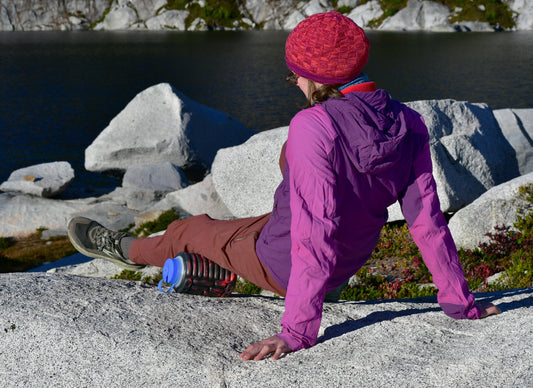

Foam rolling might not be the first thing that comes to mind when enjoying the great outdoors, but a little muscle maintenance can make a big difference after long days on the trail. Spending just five to ten minutes at camp focusing on your calves, quads, hamstrings, glutes, and upper back can reduce stiffness and help you feel more prepared for the next day's miles. Since a Bottle Roller sleeve fits around the Nalgene you are probably already carrying, it's a great option.
You can foam roll on a large rock, a log, the ground, or on a foam pad. If you're foam rolling in your tent, make sure that you have a footprint under your tent and aren't smashing your tent floor into rocks that will tear up the tent floor while you're rolling. If you're on snow, you can just put a foam pad down on the snow and roll on that. We occasionally foam roll on our Prolite Thermarest while it is not inflated and we are camped on a soft forest floor, but that is not recommended. We aren't liable if you pop your inflatable pad foam rolling on it! Bottle Rollers are quite durable and can stand up to rocks better than your tent floor or inflatable pad can.
Using slow, controlled movements, rather than rolling quickly over sore spots, will be better for both the surface you're rolling on and for your body. Pause on areas that feel especially tight for 20 to 30 seconds while taking steady breaths, but avoid rolling directly over joints or sharp, painful areas. Foam rolling works best when paired with light stretching and staying hydrated, both of which support recovery after carrying a heavy pack. By making recovery part of your evening routine, you can reduce post-hike soreness, improve mobility, and keep your body feeling strong throughout a multi-day adventure.